Introduction to the Client and Their Needs
The logistics industry in Abuja has witnessed extensive growth, and our client stands as a testament to this success. This particular logistics company specializes in freight forwarding, warehousing, and supply chain management, catering primarily to small and medium-sized enterprises (SMEs) in Nigeria. Their business model emphasizes efficiency, reliability, and timely delivery, aiming to enhance the operational capabilities of their client base. The target market includes businesses across various sectors, such as retail, manufacturing, and e-commerce, all requiring dependable logistics solutions to thrive in a competitive environment.
Despite their established presence, the client faced significant challenges that highlighted the need for a robust web development project. Their existing digital platform was outdated, resulting in inefficiencies in operations and customer interaction. Prospective clients often struggled to access crucial information about services, rates, and transit times, which impeded their decision-making process. Furthermore, the lack of an integrated online booking system made it difficult for customers to manage their logistics needs effectively, limiting the company’s potential growth and market reach.
To address these issues, the client sought to develop an effective digital platform that would not only enhance user experience but also streamline their operations. Their primary goals included creating a user-friendly website that showcased their services, implemented an online tracking system for shipments, and integrated a seamless booking process. By improving their online presence, they aimed to establish a competitive edge in the logistics sector, attracting more business and fostering lasting client relationships. The importance of a strong digital strategy in the logistics industry cannot be overstated, as it ultimately facilitates better communication, operational transparency, and customer satisfaction.
The Web Development Process: From Planning to Launch
The web development project for our logistics client in Abuja began with initial consultations, which laid the foundation for the entire process. During these meetings, our team engaged with the client to understand their specific needs, objectives, and the features they envisioned for the website. This collaborative approach ensured that the project was aligned with the client’s business goals from the outset.
Following these discussions, we entered the research and analysis phase. This step involved an in-depth review of the logistics industry, competitor analysis, and identifying best practices in web development. This comprehensive research informed our strategy and helped in making data-driven decisions as we moved forward.
Once the groundwork was established, we proceeded to design prototyping. Our design team focused on creating visually appealing layouts while ensuring user experience remained a priority. Various prototypes were developed and shared with the client for feedback. This iterative process allowed for refinements based on client input, ensuring the final design was both functional and aesthetically pleasing.
The development phase followed, where our technical team utilized advanced web development frameworks and tools to bring the design to life. Technologies such as HTML5, CSS3, and JavaScript were employed to build a responsive and robust website. Regular meetings with the client ensured transparency and alignment throughout the development stage.
Before launching the website, extensive testing was conducted to identify any issues or bugs that needed addressing. This essential phase ensured that the site functioned seamlessly across various devices and browsers, facilitating a smooth user experience. After thorough testing and final adjustments, the website was launched successfully, marking a significant milestone in our client’s digital transformation journey.
Results Achieved and Impact on the Client’s Business
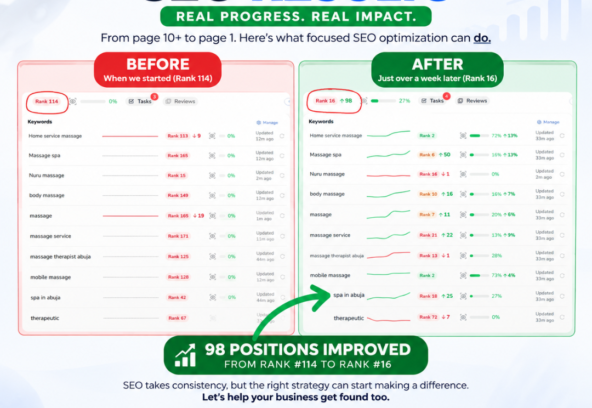
The recent web development project in Abuja for our logistics client yielded impressive results that significantly enhanced their operational capabilities. Following the launch of the new website, the client experienced a remarkable 45% increase in overall website traffic within the first three months. This surge in visitors can be attributed to a combination of improved search engine optimization (SEO) strategies and a better user experience, leading potential customers to engage more with the platform.
Moreover, user engagement metrics revealed a 60% increase in average session duration, indicating that visitors are not only finding the website but are also staying engaged with the content. Enhanced features such as real-time tracking and an intuitive interface have encouraged users to explore the various services offered, which aligns with the client’s goal of attracting new business.
Operational efficiencies were evident as well. The new platform enabled the logistics firm to automate several processes, which resulted in a 30% reduction in administrative workload. This automation has freed up resources, allowing team members to focus on more strategic tasks, ultimately improving service delivery. The client reported that order processing times decreased by 25%, showcasing the system’s capability to streamline logistics management.
Client feedback has been overwhelmingly positive. According to the logistics manager, “the new website has transformed how we operate and engage with our customers. The ease of use and functionality have allowed us to grow our client base significantly.” This testimonial reflects the profound impact the new web platform has had on their business operations and customer relations.
Lessons Learned and Future Directions
Throughout our recent project in developing a web platform for logistics operations in Abuja, several key lessons emerged that will inform future endeavors in this domain. One prominent challenge was the integration of existing logistics systems with new web technologies. Our team discovered the importance of maintaining clear communication with the client to understand their needs and constraints, fostering a collaborative environment that was essential for tackling integration hurdles effectively.
Another significant lesson was the necessity of adaptability during the development process. The logistics sector is characterized by rapid changes, and our flexibility allowed us to pivot our strategies as new requirements arose. As the project progressed, we implemented iterative testing to refine the functionality, which enhanced user experience and optimized logistics management processes. Engaging with end-users to gather feedback proved invaluable in creating a platform that truly meets operational demands.
Looking ahead, the future of the client’s logistics operation appears promising. Emerging trends, such as the adoption of artificial intelligence for predictive analysis and automation, are expected to play a crucial role in enhancing efficiency and decision-making within the sector. Our team is committed to supporting the client’s growth through ongoing enhancements of the web platform, ensuring it can adapt to these evolving technological advances.
Furthermore, we foresee the incorporation of mobile solutions as a priority, given the increasing reliance on mobile technology within logistics. By ensuring that the web platform evolves alongside these trends, we will empower our client to remain competitive and responsive in a fast-paced market.
In summary, the lessons learned from this project not only highlight the challenges we faced but also outline a pathway for future development. By leveraging these insights, we are positioned to better support client needs while embracing innovations that will shape the logistics landscape in Abuja and beyond.